Showing posts with label Tabletop RPG. Show all posts

Friday, January 22, 2021

Android Setting: Jinteki

Mood Music 

"Never forget that your clone is a living being. Like pets and even humans, clones have biological necessities that must be addressed. New owners can at times forget, and clones--especially ones placed into new circumstances--are often reluctant to bring them up..."


In 1873, Satoshi Akiko stepped out of the fuedal holdovers of rural Japan and into the modern world of pharmacy. Kyoto was on the up and up, and the Satoshi family made a name for themselves by cutting ahead of the curve regarding industrial distribution for their wares, and riding into the 20th century on the wave of progressive company policy, cross-media investment, and private outsourcing of medical research. The pharma boom of the 21st century rocketed the Satoshi name into household presence, though their milieu was limited mostly to the staples of combating common illness, improving skin health, and adding shine to the pearly whites of the world's suburban sprawl.

Everything changed when the Big War came and went.

Wednesday, December 2, 2020

Android Setting: Haas-Bioroid

 Mood Music

Effective. Reliable. Humane. A Different Breed of Machine.


Cars, guns, transcendence--a strong company ethic grows and adapts to meet consumer demand. 

What began as a heavy manufacturing business in Germany over a hundred years ago, Haas Industrie transformed from automation process supplier for the European Union to the most profound technology conglomerate in human history. What Jürgen Haas didn't know when he started his production company was that his descendents would learn not only how to play God, but to sell his miracles at a competitive margin.

Cybernetics was always a passing fancy for heavy industry and tech start-ups alike, but what cybernetic interface research needed to truly flourish was a framework which could fully leverage automated intelligence. Anyone can build a tank or a crane or a side-arm, but can they create a self-diagnostic artifical leg which passes for the real thing? What about replacing a damaged central nervous system and making the lame man walk? Can they build a computer so nuanced, it sincerely believes it is human? These were questions which Haas Industrie began to ask after Jürgen's son, Dieter, took over the company after his father's passing. 

Limb replacements and augmented implants stepped out of the medical field and into the cosmetic and security industries. Hand-held weapons which could think and see for their wielders became staples for UN peacekeepers in dangerous territory. Subdermal arrays helped not only to combat congenital defects but reinforce the perfection of celebrities' bodies and charisma. The market was always there, but until Haas Industrie entered the scene, it was dry and unanswered.

Thursday, November 19, 2020

Android Setting: Weyland Consortium

Mood Music 

"I'd like to remind the ladies and gentlemen of the press that several of the buildings damaged in the blast were owned by Weyland Consortium subsidiaries… I'd say it's nothing personal, but corporations are people, too." 


Jack Weyland was a university boy who attended Ivy Consolidated given his parents' combined wealth in private venture. They wanted him to become a businessman. He decided to become an engineer, instead, until he dropped out and founded his own research lab where the science-fiction of nanoferrules became reality. Several investments and a half-baked marriage later, Weyland-Osman Materials was born, and with it, the grant money and government contracts that allowed for the full realization of its next phase, Weyland Constortium. Investing across a multi-layered portfolio of business interests, Weyland Consortium turned its full attention to constructing the Beanstalk, the beyond-ambitious space elevator of Jack's engineering dreams. In ten years and the substantial pooling of much of the world's government wealth, the Beanstalk was a reality. Jack immediately turned his attention to next tackling more efficient space travel, off-world colonization, and fusion refinement, but the Weyland board of directors deemed him too fast and forward-thinking. Wanting to protect their massive investment capital for the Beanstalk project, they ousted Jack Weyland from his own corporation.

Weyland, himself, left to fund many of his own projects, and remains an enigmatic visionary amidst a system which became far larger than he intended, and one which is utterly corrupt in his absence.

Tuesday, November 17, 2020

Hacking Globalsec from New Angeles: A Quick Android Setting Primer

Mood Music

The Android setting by Fantasy Flight Games is huge. It began in the late 2000s with an eponymous board game which was more like a cyberpunk noir film generator than a murder mystery game. It was brilliant, and remains a personal favorite for just how existential it is. Later, FFG got the rights for Richard Garfield's old Netrunner CCG and released Android: Netrunner, where the lore exploded across all of the card sets. I've indulged a lot of cyberpunk over the years, be it through the classic novels and stories, Bladerunner and its adjacents, or board and roleplaying games alike. My favorite take on the genre remains Android, and as I mull over running a diceless cyberpunk game, I decided I'd dust off the beautiful (and huge) Worlds of Android artbook/lorebook that FFG released several years ago. 

So, for any of you who are already familiar with Android, whether through the board game, the brilliant asymmetric card game, or the "official" adaptation through FFG's Genesys system, none of this is new. For the rest, I want to introduce you briefly to the setting, and put out another few posts about quick-hits for lore touchpoints for megacorps, factions, groups of runners and hackers, and the like. Nothing crunchy. Few, if any numbers. Just tasty bits to break off and insert into your various cyberpunk-adjacent games. If you have Worlds of Android, great, it's fantastic, but it's also a tome, and no one wants to quickly gloss a tome when you only need a few hand-holds into the setting.

Why do I prefer Android over other, more recognized cyberpunk settings? Perhaps because it came about more recently and affords a more accurate projection of our actual society into the near future. Perhaps because not every story within is about nihilist anarchism raging against the machine (featuring soccer moms-turned-hackers like Sunny Lebeau, everyday transhumans like teenaged Kit Peddler, or a remnant AI from before the big war, slowly evolving in the darkest corners of the internet, like APEX). Perhaps because there is limited stellar sci-fi, with a giant space elevator in Ecuador, fusion reactors on the moon, and colonies on Mars. But I'd be lying if I said it didn't have anything to do with the net wünderkind, Chaos Theory, and her computer console, Dinosaurus.

"When I said I could hack in my sleep, did you think I was joking?"

Friday, November 13, 2020

The Dank Morass: A Swampcrawl for Weird North

So, the Gygax 75 bit is supposed to be weekly. Well, this second installment of my attempt is, uh, monthly. I blame my infant, my seminary degree, and Hearthstone*. That's at least a start.

With the help of my son, Ted (who has starred in all of my RPGs With Kids posts), I put together the first of what I hope to be multiple regional maps/crawls/supplements for Weird North. A while back I pitched him "a spin on the Dark Tower," which, of course he doesn't know about, given that I don't recommend suggesting Stephen King novels to children. He thought I said "Dank Tower," and stuck with it. It cracked me up, so I decided, yeah, Dank Tower, in some awful swamp filled with dinosaurs and relics from a bygone era. The Dank Morass was born, and now I will attempt to translate it here for your rudimentary use as I slowly hone it for my own purposes. So, well, I guess this is my second offical "Gygax 75" post. Hoo boy. 

It's dank. Dank.

Tuesday, June 23, 2020

Any Planet Is Earth is LIVE


Welp, after several months of writing, refinement, and relentless editing for concision, my little sci-fi game, Any Planet Is Earth, is live and available for sale at DTRPG and itch.io! To say I am pleased with it is an understatement. I am pumped! I want to give a big thank you to those who provided excellent feedback, playtesting, and inspiration to the project, and a special shout-out to Jeff Woodman who put together the evocative and brilliantly simple cover art (the little ship is my fave).

Thursday, June 4, 2020

2d6 Sci-Fi d66 Tables

As I continue chugging along with Any Planet Is Earth I find myself thinking about what referee tables would actually help me when running the game. I have plenty made up at this point, and I have more to go, but I thought I'd plop out a few of the most generic for the sake of broader usability. Since d6 is the best die, and 2d6 is the best number of dice, and d66 is the best table, and Maze Rats has the best d66 presentation, I opted to go with that formatting.

Thursday, May 21, 2020

An Example Crew

To follow up on yesterday's post about character generation in Any Planet Is Earth, I rolled against some tables tonight to generate a sample crew of five people for play following their respective careers. I rolled 100% randomly here, not picking services for any characters, whether initial or follow-up.

Pardon my coffee table (janky).

Wednesday, May 20, 2020

Any Planet Is Earth: Character Generation

After establishing intitial concept for Any Planet Is Earth, I've put together the service tables for terms served by players during character generation. You'll either roll for or select your starting service, roll 2d6 against the corresponding table, then either accrue skills or bonuses or roll against subtables for events, mishaps, and boons. In this manner I am scraping my favorite bits from the expanded Mongoose Traveller 2 career tables and stripping them of their context, allowing for players to come up with the context for their results or with help from the referee. This provides some easy worldbuilding while also setting up your character quickly with a lot of variablility.

Thursday, May 14, 2020

Any Planet Is Earth: Core Rules Draft


"Any planet is 'Earth' to those who live on it." 
Isaac Asimov, Pebble in the Sky

I thought I wanted to set out to make a fantasy adventure game of my own design. I was wrong. I already held Into the Odd and (the tragically lesser known) MoldHammer up as near-perfect designs (the former with a bit more crunch than the latter [which sounds amusingly impossible]). After digging into the Electric Bastionland rules (not to mention already enjoying Mausritter, Maze Rats, and other venerable off-Odd derivative hacks), I realized that there is no fantasy design space I really care to fill. I will 100% always play or run or hack any title from that family of games.

So with few other strong contenders for genre, I turn to science fiction, which I've really always admired reading and exploring far more than fantasy literature and games of all stripes. Isaac Asimov, Robert Heinlein, Jack Vance, Orson Scott Card, and William Gibson took up (and still take up) a great deal of my reading budget, among other similar contemporaries. 

Thursday, April 23, 2020

The Sci-Fi Encounter Die

I really enjoy hard-going-on-harder science fiction. Star Wars and general science fantasy/space opera are wonderful, but I prefer the Robert Heinlein/Issac Asimov variety the best. I've been reading it for far longer than I ever read Tolkien, Vance, or LeGuin. I find myself in the thick of the OSR fantasy side of things if for no other reason than the ubiquity of dirty goblins in the world. This is not a bad thing. In fact, it is readily enjoyable. That said, after reading through The Traveller Book several times after grabbing it in POD format, I realize that really and truly I am a sci-fan before I'm a fantasy fan. It's not really a "this or that" situation, of course, but all that is to say that I have spent a lot of time trying to come up with a "perfect" fantasy rule set for my use, only to find that in all honesty, Mausritter beat me to it. Seriously, every riff on modern "old school" fantasy I had brewing in my brain has been done already and better by Isaac Williams. Go download his game and enjoy--it's Into the Odd taken to the Platonic Ideal of OSR adventure.

The illustrious A. Shipwright.

Monday, April 13, 2020

Three Alt-Mesozoic Fantasy Dinosaur Archetypes


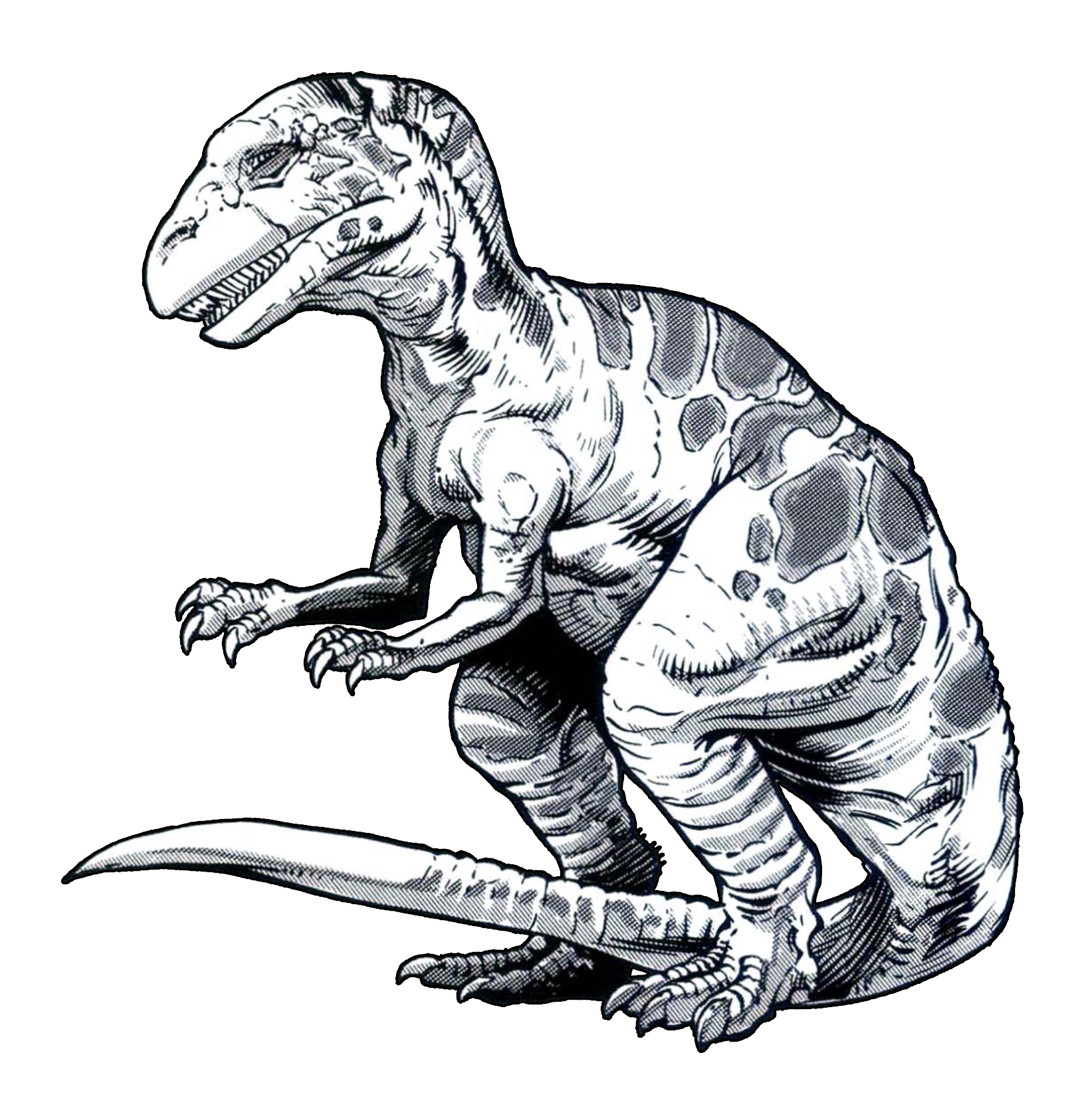
For this year’s bonus Secret Jackalope, I present Lexi with dinosaurs from a different, fantastical Mesozoic era.

AD&D Allosaurus, looking a bit bent.
Dinosaurs, as we know of them on earth, were once the apex examples of both predator and prey alike. The various eras of natural prehistory featured a menagerie of amazing creatures, but only the Mesozoic Era provided us with dinos, and we got zounds of them. Traditional dinosaurs have shown up in RPGs since their inception, with a number of supplements, adventures, locales, bestiaries, and whole campaign settings devoted to them or highlighting them prominently.

Tuesday, January 28, 2020

Runes and Rune Words

Diablo II is a masterpiece. 

I'm not much for "gearporn," and in fact, I mostly hate that wretched term. That said, if one game got the idea of nigh-limitless equipment options right, it was Diablo II. The vanilla game was stacked with all sorts of axes, boots, wands, gems, helms, belts, and potions... but when the expansion, Lord of Destruction, was released along with some battle.net patches, the scope of the game's equipment list became truly staggering. I won't go into undue detail here, but one item type introduced in the expansion content is the focus of this post: runes.

Friday, January 17, 2020

Talents: Divine and Weird

After looking at fighter/rogue and ranger/wizard talents for use in Knave and similar rules-light whatever-games, we come to cleric-analogues and... everything else. The "weird" list has made appearances across the blogopshere and seems to be the witchy/eldritch/esoteric bucket for various and sundry curious abilities. I've very much enjoyed what I've seen elsewhere, and tweaked and added my own thoughts to finalize what I'd like to leverage in terms of flavor and mechanics.

Monday, December 30, 2019

Talents: Survivalist and Arcane

In my last post riffing off of Knave and the idea of expanding the class-less structure to something akin to a talent tree or loose categories of "adventuring" perks, I looked at martial and specialist talents, roughly mapping to "fighter" and "rogue" archetypes. Today, I'm looking at survivalist and arcane talents, which are sorta-kinda like "rangers" and "wizards" except that my intent, overall, is to lean towards flavor and utility without rehashing tropes.

Saturday, December 21, 2019

The Lounge Temple of Asavraki

One of the reasons I started this blog was for ease of use regarding the OSR Discord's Secret Santicorn exchange. I, myself, received a fantastic d66 table of utility spells from Isaak at Fallen Empires, and look forward to implementing it in my games! I received a request from Shoe Skogen -- "temple dungeon, etc etc for a tropical archipelago, with fun adventures, monsters, maybe a factional dispute?" I wracked my brain on this one for a bit, but inspiration came to me in a torrent and I began to realize a small reinvigorated temple in the depths of the jungle wilds with an unusual twist.

What if an old goddess fell out of favor with broad worship, but was rediscovered by a cadre of opportunistic goblins? What if that goddess, Asavraki, was the minor deity of fragrance and leisure? What if that means she is basically the goddess of midnight toking? What if the goblins are not exactly aligned on goals, with some being sincere followers, and others being money-grubbing dogs about the whole affair? What if there are kobolds? And paladins? And old priests locked in stasis?

Well, all of that, and more, awaits you in...


I went back and polished it up and released it for a buck on DTRPG and itch.io. If you ask kindly, I'll give you the drive link for freebies, otherwise you can nab it in the links above.

Tuesday, December 17, 2019

Inventory, Exploration, and Resting

Before digging into more talents, let's recap and expand upon some basic mechanics of the little ruleset I'm putting together by clarifying two central ideas: inventory and the encounter die.

At present, all PCs start with fourteen inventory slots. Additional slots are awarded if their strength, constitution, or intelligence scores exceed 15. This can happen three times as a result. If all three of these scores are above 18 (which takes a while to accrue in any campaign), they're awarded with another bonus trio of slots. That is to say that any PC will only ever have between fourteen and twenty slots. No less, no more (well, unless some wonky magic item or godling's blessing shows up, of course). In this framework, most things take up one slot (like a mace, spellbook, or small golden idol), while a handful of other items can be bundled together to conserve space (such as pitons, ball bearings, or coins), and many others require anywhere from two to four slots apiece (including platemail, a big shield, or an impressionist masterpiece). If PCs fail to eat/drink/rest they gain fatigue, which eats up inventory slots until resting for a while in a haven location (ie, not the wilderness). Inventory is cramped, basically. It's meant to be.

Thursday, December 12, 2019

Goblin Mung, A Neural Net Expose

I recently listened to the excellent 99% Invisible podcast, wherein the discussion centered on modern conversational AI, its 20th century origins, and its evolution into contemporary neural networks. One of the top-performing "most human" neural nets today is GPT2, which famously made a very convincing news-story-style write-up about the discovery of unicorns in the Andes (scroll to the bottom). I decided to spin up a test of the open-source coding for this model available at Talk to Transformer, focusing on my favorite fantasy RPG McGuffin, goblin mung. Here's the prompt: Goblin mung is one of the most hotly sought-after hallucinogens available today.

Tuesday, December 10, 2019

Talents: Martial and Specialist

Knave is fantastic. Everyone go buy it and enjoy. It's the post-retroclone retroclone, insofar as it's aim is to fundamentally streamline the B/X-era D&D formula into the most basic and accessible format possible. Ben Milton, the author, also notes that it thus assumes the position of ideal hack-able skellington for all manner of rules-light OSR frameworks. Knave assumes that no classes exist. Like Maze Rats before it, all adventurers are simply that, adventurers. Not everyone has to be trained up as a cleric or fighter or magic-user etc, you're just folks who have no better option than to delve for a living.

As a result, the immediate oh, let's hack this element to Knave is formatting some sort of class-analogue structure to the otherwise-class-less rules system. Among the various Discord channels this structure has come to be known as Knacks, mainly because Knack and Knave sound so canny together. Check out Laughing Leviathan's excellent Knave-Knacks and A Man With A Hammer's Knacks for Knaves for other posted variables on the formula. More are floating around, currently unpublished in various ways and means, and I highly recommend you check them out as you find them.

Sunday, December 8, 2019

Scrapping To-Hit with Modded Weapon Tables

Two years ago, I read Troika!, and besides the surreal whimsy of the implied setting by way of the many (d66, no less) backgrounds stocked within the strange pages of the book, I was smitten with the mechanics of the thing. A riff on Fighting Fantasy, the game supposes a robust advanced skill system which, unlike modern game-mechanism-forward iterations of "perception" or "arcana," presents us with treats such as "etiquette," "golden barge pilot," and "mathmology."

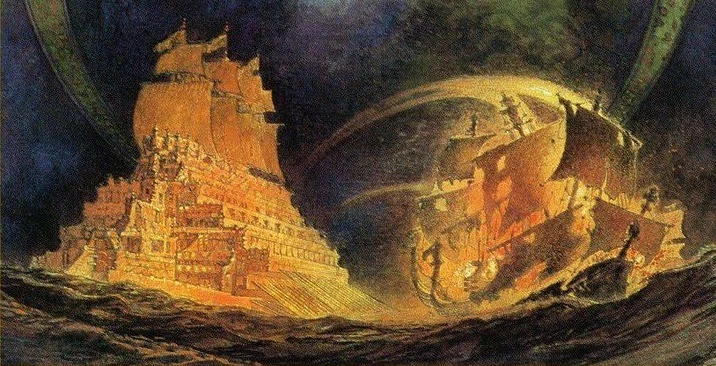
But seriously, look at how golden this barge is. See how it shines.